

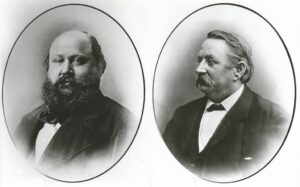
1864
We are in Berlin in the second half of the 19th century. The mechanic Franz Schmidt is working in a small workshop for physical instruments in the Alexandrinenstraße. The mechanic and optician Herrmann Haensch is managing a small business in the Adalbertstraße 82 and later in the Karlsstraße 8. They had trained to be mechanics with the same master craftsman, Wilhelm Langhoff. Using an inheritance of 8000 Thaler both decide in April 1864 to continue their activities together, laying the foundation for a company which today is proudly looking back to its more than 160 years heritage.
1870
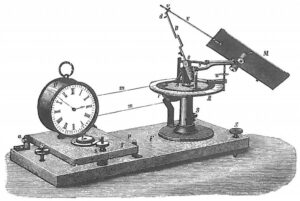
For lack of electric light, the heliostat also was part of the standard equipment of optical instruments at SCHMIDT + HAENSCH. Here sunlight was caught with a mirror and the changing position of the incident sunlight was compensated by a gear coupled to a clock.
1879
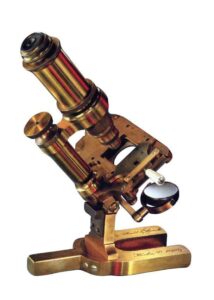
At the request of the famous pathologist Rudolph Virchow, SCHMIDT + HAENSCH constructs microscopes for the examination of meat, which should prevent the spreading of trichinosis. The pathologist wanted to prevent a long, drawn-out discussion about the most suitable microscopes. Even before publication of the document he had already contacted a mechanic in Berlin who had made a name for himself with the manufacturing of microscopes. “At my request, optician Hänsch [sic] in Berlin (Karlstraße 8) has constructed small microscopes for this specific purpose. They provide 100 to 180x magnification and cost only 10 to 12 Thalers.” (Rudolf Virchow)
1880
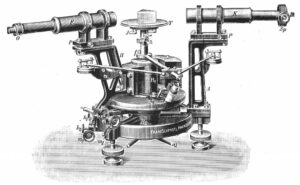
Electrically generated light was not yet used as it is today, not to mention the creation of a defined wavelength, interference, or edge filter. However, the gas-powered Bunsen burner already existed. Pure elements like sodium, potassium, and also mercury were burned in the Bunsen burner, and they emitted light with specific wavelengths. Thereby it was possible to produce the so-called standard wavelength with high precision. In the form of spectral light sources, those chemical elements they still play an important role today, because they very stably emit only one discrete wavelength.
1881
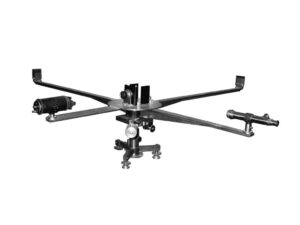
The foundation of Alexander Graham Bell assigned 2,000 USD to young Michelson who was in Berlin, eager to begin work on his experiment. Michelson used this money to commission SCHMIDT + HAENSCH to manufacture an instrument. Michelson knew how unique this experiment of testing the ether drift’s impact on the speed of light would be, and thanks to his acquisition of a measuring instrument from SCHMIDT+ HAENSCH, it was now actually within reach. The Michelson-Morley experiment in 1889 confirmed conclusively that the Earth’s motion against the ether, which had been assumed for a long time, did not actually exist. This discovery created a huge unexplained gap in experimental physics, which was only resolved by Albert Einstein’s special theory of relativity. For his groundbreaking research, Albert Abraham Michelson was awarded the Nobel Prize in Physics in 1907 and became the first American to receive the prize.
1890
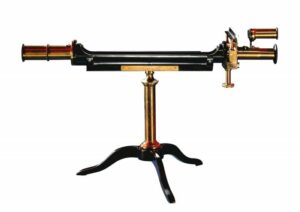
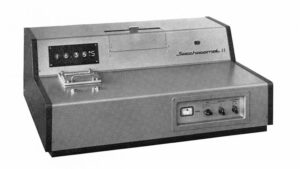
A close relationship with the chemist Karl Ventzke of the Schicklersche Zuckerfabrik laid the foundation for effective sucrose measurement technology which is still being used today. This collaboration established the connection between the optical rotation of quartz and that of sucrose; this concept is still used to measure the sucrose content in sugar beet. Until today, the same optical principles are employed in the modern automatic quartz wedge polarimeter, the SCHMIDT + HAENSCH Saccharomat.
1895
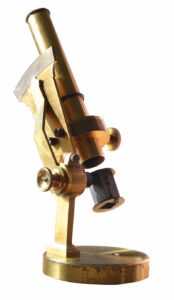
The basics of refractometry were developed by Ernst Abbe and Karl Pulfrich in 1869. A refractometer operating on the Pulfrich-principle and in accordance with Abbe was built by SCHMIDT + HAENSCH already in the 19th century.
1905
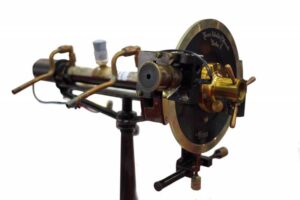
Alfred Werner received the Nobel Prize in Chemistry in 1913. He was honored for his work on the arrangements of inorganic complexes. Contrary to prevailing opinion at the time, which was based on the chain theory by Danish chemist Sophus Mads Jørgensen, Werner developed a new structural model by using metal complexes like cobalt salts. He proposed the geometry of an octahedron and located two isomers at its vertices. His assumption, which was initially purely theoretical, was then successfully verified by means of a SCHMIDT + HAENSCH circular polarimeter in the labs of the ETH Zurich, the so-called catacombs. Even though it was a controversial issue in the beginning, this theory established a three-dimensional structural model as a basis for different spatial arrangements of organic and inorganic substances in relation to a central carbon molecule. To this day, this model has been crucial to the applications of polarimetry.
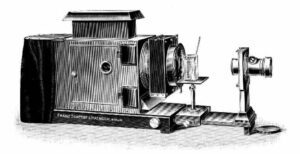
1910
In 1910 the company presented a projector which could be used by engineers and art historians alike: “The apparatus built in [the] Franz SCHMIDT + HAENSCH workshop not only allows the projection of transparent objects (diapositives, cuvettes, galvanoscopes, etc.), but can also project images of nontransparent lying or standing objects, such as illustrations from books, drawings, metal fractures, anatomical specimens on plates and in jars, bodily objects, and all chemical experiments carried out in vertical containers, as well as horizontal transparent objects, such as crystallizations, depictions of force lines, sound figures, etc.” (Wilhelm HAENSCH)
1921
1955
1960 – 1990
1963

1969
1982

1983
1986

1989
2000
2003
2005

2014
2015 until today
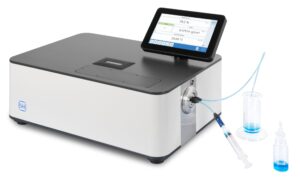
Based on the high level of fine mechanics and optics, today SCHMIDT + HAENSCH produces and distributes high-quality refractometers and polarimeters, density meters, and color measuring devices all over the world. The realm of laboratory measuring instruments is completed by the areas of process technology and automation to satisfy the demand for on-line information processing and control. The modular construction of the opto-electronic measuring systems allows a high flexibility and customer specific solutions. SCHMIDT + HAENSCH employs a highly qualified team of developers and manufacturing specialists to guarantee a constant high product quality and sustain and strengthen its leading position in the market all over the world. The company not only produces standard instruments, but it also adapts the measuring devices to special requirements of the customer. In addition, SCHMIDT + HAENSCH is constantly developing new applications and procedures in cooperation with the customers. Today, the company collaborates with universities, colleges, and other research institutes to develop new instruments, optimize methods, and support scientific discoveries.


