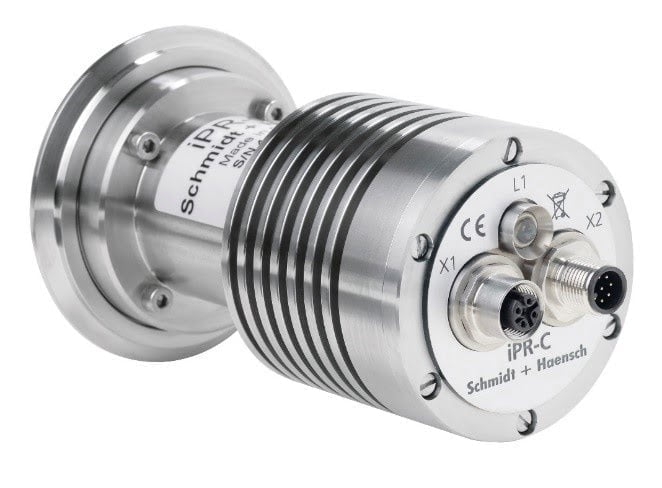
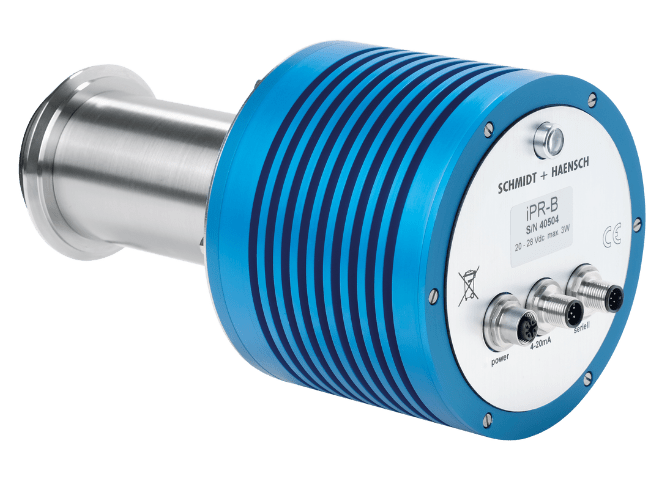
In defined CMP slurry formulations, hydrogen peroxide (H₂O₂) concentration can be monitored continuously using
inline refractometry. Real-time refractive-index measurement helps detect peroxide dosing errors, dilution deviations, and concentration drift during slurry preparation and distribution.
What Is the Role of H₂O₂ in CMP Slurries?
Chemical Mechanical Planarization (CMP) is an essential process in semiconductor manufacturing for creating highly planar wafer surfaces. The process combines mechanical abrasion with controlled chemical reactions to selectively remove material from the wafer. CMP slurries therefore contain abrasive particles, ultrapure water, and application-specific chemical components.
For many CMP processes, hydrogen peroxide (H₂O₂) is added as an oxidizing agent. Its concentration is an important process parameter because changes in peroxide content can influence the chemical reaction at the wafer surface and consequently affect material removal and polishing performance.
During slurry preparation, concentrated slurry is typically diluted with ultrapure water and blended with H₂O₂ before being supplied to the polishing tools. Commercial hydrogen peroxide used for slurry preparation is commonly available in concentrated form, while the final CMP slurry typically contains considerably lower H₂O₂ concentrations depending on the specific formulation and process requirements. Precise dilution and dosing are therefore essential for obtaining the required final composition. Continuous refractive-index measurement provides an effective method for monitoring these concentration changes directly in the process stream.
Why Must H₂O₂ Concentration Be Controlled?
Hydrogen peroxide provides the oxidative action required in many CMP formulations. The correct concentration helps maintain defined chemical conditions during polishing and contributes to consistent material removal.
If the H₂O₂ concentration deviates from its specified target, the balance between the chemical and mechanical components of the CMP process can change. Incorrect peroxide dosing, dilution errors, or changes in slurry composition may therefore result in unstable process conditions.
Another important factor is the limited stability of H₂O₂ in the process mixture. Its concentration can change during preparation, storage, and circulation. Reliable concentration monitoring is consequently important not only during initial blending but also throughout slurry handling and distribution.
Maintaining the specified H₂O₂ concentration supports:
- Consistent slurry composition
- Stable chemical conditions during CMP
- Reproducible polishing performance
- Reliable slurry blending and dilution
- Early detection of peroxide dosing errors
- Reduced risk of processing slurry outside its specified concentration range
Why Is Continuous H₂O₂ Monitoring Essential?
Laboratory analysis and titration can provide accurate information about H₂O₂ concentration, but these methods only represent the condition of the slurry at the time of sampling. Changes occurring between individual measurements may remain undetected.
Inline measurement closes this information gap by continuously monitoring the process stream. Deviations caused by incorrect dilution, peroxide dosing, or concentration drift can therefore be identified immediately rather than during a subsequent laboratory analysis.
This is particularly valuable in automated slurry delivery systems, where concentrated slurry, ultrapure water, and hydrogen peroxide are blended before the finished mixture is transferred to a tank or supplied to the CMP tools.
Continuous monitoring also enables the measurement value to become part of an automated process-control strategy. Instead of relying solely on periodic quality checks, slurry composition can be verified while the process is operating.
How Does Inline Refractometry Monitor H₂O₂ Concentration?
The refractive index (RI) of a liquid changes systematically with its composition. By establishing an application-specific relationship between refractive index, temperature, and slurry composition, refractometry can be used to monitor concentration changes directly in the process stream.
An
inline process refractometer measures the optical properties of the slurry continuously without requiring manual sampling. The measurement principle is based on total internal reflection.
Changes in liquid composition result in measurable changes in refractive index, which can be evaluated and converted into an application-specific concentration value.
This makes refractive index an effective Process Analytical Technology (PAT) parameter for CMP slurry preparation and distribution. The measurement provides immediate information about the process and can be used to detect deviations from the required composition.
Where Should H₂O₂ Be Measured in CMP Slurry Delivery Systems?
An inline refractometer can be installed at different points within the CMP slurry preparation and delivery system. Suitable measurement locations include the blending station, recirculation loop, day tank, and distribution line toward the CMP tools.
A particularly important measurement point is downstream of H₂O₂ addition. At this location, the instrument can continuously verify whether the finished slurry has reached the specified composition before being supplied to the polishing process.
The measurement signal can be transferred directly to the process control system, allowing the measured concentration to be compared with the defined target value. Deviations can therefore be detected rapidly and corrective action initiated before incorrectly blended slurry reaches the CMP tool.
This approach also supports closed-loop process concepts in which measurement data are used directly for slurry blending and concentration control. Inline RI measurement has been demonstrated for real-time monitoring and closed-loop adjustment of CMP slurry preparation.
What Are the Benefits of Continuous H₂O₂ Concentration Monitoring?
Continuous refractometric monitoring provides important advantages for CMP slurry preparation and semiconductor manufacturing:
- Continuous, real-time H₂O₂ concentration monitoring
- Immediate detection of incorrect peroxide dosing
- Rapid detection of dilution errors and concentration drift
- Direct measurement in the process stream
- Reduced dependence on manual sampling and laboratory analysis
- Verification of slurry composition before delivery to the CMP tool
- Integration into automated process-control systems
- Support for closed-loop slurry blending and concentration control
- Improved process transparency and reproducibility
- Support for consistent CMP process conditions