
How Is Sweetened Condensed Milk Produced?
The production of sweetened condensed milk involves several carefully controlled processing steps to achieve the required composition, product stability, and batch consistency. The process typically includes:- Standardization of milk fat and solids-not-fat (SNF) to establish a consistent composition of milk solids before processing
- Heat treatment for microbial stabilization and product safety
- Vacuum evaporation to remove water and increase the concentration of total milk solids
- Addition of sucrose as dry sugar or syrup to achieve the required sugar concentration and preservation effect
- Homogenization, if required, to improve product uniformity and stability
- Controlled cooling and lactose crystallization to obtain the desired texture and mouthfeel
- Filling and storage under hygienic conditions
Why Do Accurate Sucrose and Total Solids Measurements Matter?
Accurate monitoring of sucrose concentration and total solids is one of the most important quality-control measures in sweetened condensed milk production. Insufficient sugar concentration can reduce microbiological stability and shorten shelf life. Excessive sugar addition may negatively affect crystallization behavior, product texture, taste, and production costs. Variations in solids concentration can additionally result in:- Inconsistent viscosity
- Uncontrolled lactose crystallization
- Reduced product quality
- Increased production costs
- Process inefficiencies
- Regulatory compliance challenges
How Is Sucrose Determined by Polarimetry According to ISO 2911?
Sucrose is an optically active sugar that rotates polarized light. This property enables the highly accurate determination of sucrose concentration using polarimetry. International standards such as ISO 2911:2004 | IDF 35:2004 describe a standardized polarimetric method for determining sucrose content in sweetened condensed milk. The procedure involves clarification of the milk sample to remove proteins and fats, followed by optical rotation measurements before and after sucrose inversion. The sucrose concentration is then calculated from the change in optical rotation. Due to its accuracy, reproducibility, and standardization, polarimetry remains one of the most established analytical methods for sucrose analysis in dairy quality-control laboratories.Which Laboratory Polarimeter Is Suitable for Sucrose Analysis in Condensed Milk?
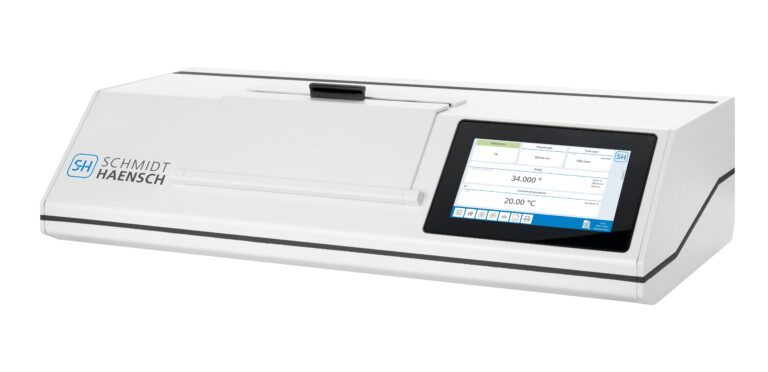
The SCHMIDT + HAENSCH UniPol V digital polarimeter provides a reliable and highly accurate solution for determining sucrose concentration in sweetened condensed milk. As a laboratory instrument developed for the analysis of optically active substances in the food industry, it delivers precise and reproducible results that support quality assurance throughout the production process. The UniPol V is suitable for laboratory applications including:- Incoming raw-material inspection
- Verification during production
- Final-product quality control
- Standardized sucrose determination
- Regulatory compliance testing
- Reliable measurements according to the established ISO 2911:2004-12 method
How Are Total Solids Monitored During Production?
While laboratory analysis verifies the quality of the finished product, efficient manufacturing requires continuous process monitoring directly in the production line. Inline measurement allows operators to observe concentration changes as they occur, eliminating delays associated with manual sampling and enabling immediate corrective action whenever process conditions deviate from specification. The refractive index of sweetened condensed milk is closely correlated with its total solids content. As water is removed during evaporation and sugar is added, the refractive index increases with the concentration of solids. Continuous inline refractive-index measurement therefore provides a reliable indicator of process concentration throughout production. Monitoring total solids at different stages of the process provides valuable information for both product quality and process efficiency. Measuring the solids content after milk standardization establishes the initial concentration, while measurement downstream of the evaporator verifies evaporation performance and confirms that the required solids level has been reached. Comparing these values enables manufacturers to calculate the required amount of sugar more accurately and achieve the target composition before crystallization and filling.What Are the Benefits of Continuous Inline Concentration Monitoring?
- Real-time process control
- Immediate detection of concentration deviations
- Optimization of evaporation efficiency
- Improved sugar-dosing accuracy
- Reduced manual sampling and laboratory workload
- More stable production conditions
- Consistent product quality
Which Inline Process Refractometer Is Suitable for Sweetened Condensed Milk Production?
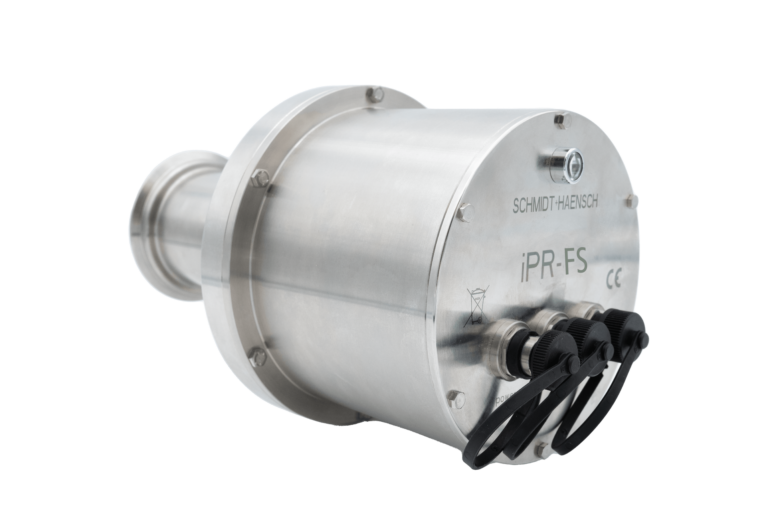
The SCHMIDT + HAENSCH iPR FS inline process refractometer provides continuous, high-precision monitoring of total solids during sweetened condensed milk production. By measuring the refractive index directly in the process stream, the system supplies real-time concentration data for process optimization, automatic control, and quality assurance. Depending on the production layout, the iPR FS can be installed at several critical process points:- After milk standardization to verify the initial solids concentration
- Downstream of the evaporator to monitor evaporation efficiency
- Before crystallization, storage, or filling to confirm the target concentration
- In a bypass installation for flexible integration into existing production lines
Where Are Polarimetry and Inline Refractometry Used in Condensed Milk Production?
- Sweetened condensed milk production
- Sucrose content determination
- Total solids monitoring
- Evaporation process control
- Sugar-dosing optimization
- Final-product quality assurance
- Dairy process monitoring
- Regulatory compliance testing