

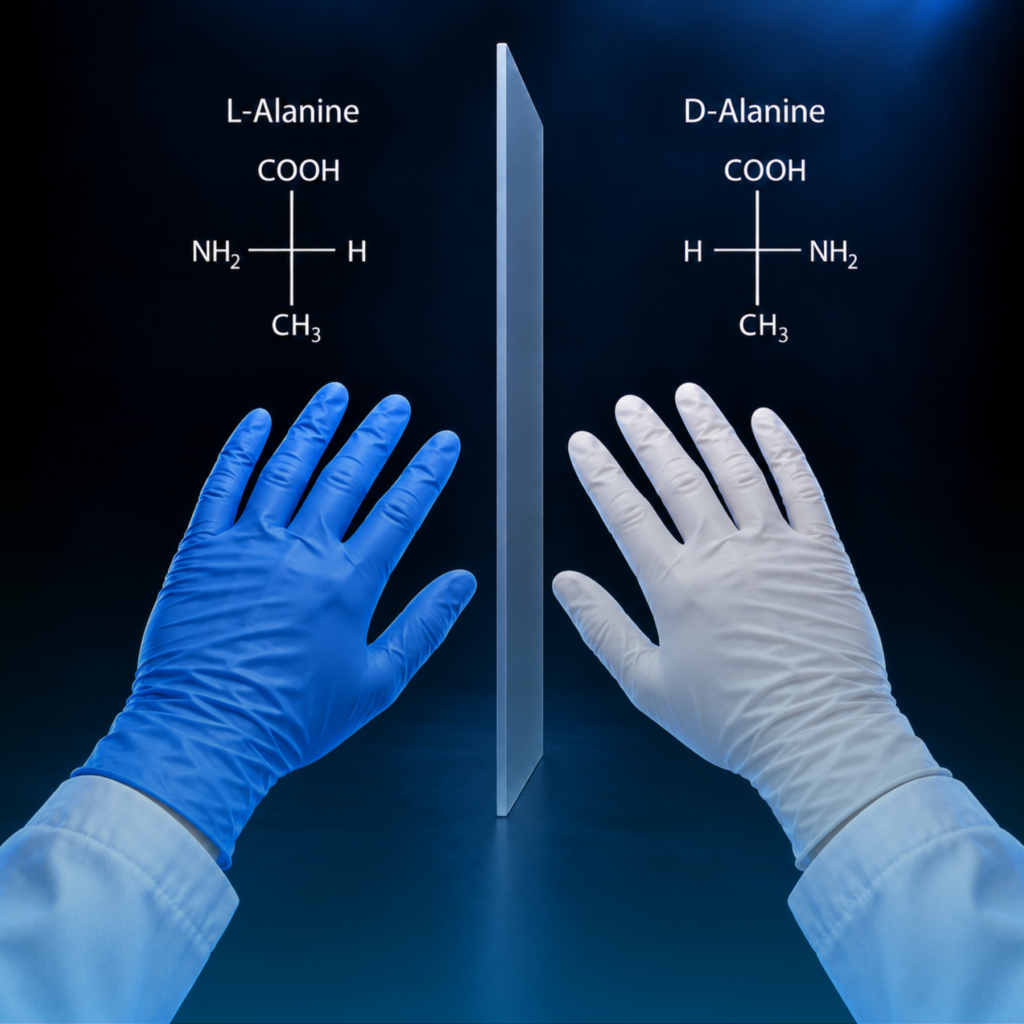
Congratulations to Henri B. Kagan and Kenso Soai, awarded the 2026 Nobel Prize in Chemistry for their groundbreaking discoveries of nonlinear effects and autocatalysis in asymmetric organic synthesis. Enantiomers, non-superimposable mirror-image forms of chiral molecules, share most physicochemical properties in achiral environments but can interact differently with biological systems.
Controlling enantioselectivity is essential in asymmetric synthesis, particularly in the production of active pharmaceutical ingredients (APIs). Kagan demonstrated that the enantiomeric excess (ee) of a reaction product does not necessarily vary linearly with the ee of its chiral catalyst. Soai demonstrated asymmetric autocatalysis, in which a chiral product catalyzes its own formation, amplifying an initially small enantiomeric imbalance. Together, these discoveries have advanced our understanding of chiral amplification and potential chemical pathways toward molecular homochirality.
A Historical Connection to Alfred Werner
For SCHMIDT + HAENSCH, this year’s Nobel Prize has a particularly meaningful connection to our scientific heritage. One remarkable chapter of this history dates back to 1905, when a SCHMIDT + HAENSCH circular polarimeter was used in the research of Alfred Werner on coordination compounds and optical isomerism. Werner later received the 1913 Nobel Prize in Chemistry for his pioneering contributions to coordination chemistry.
Discover more about our company history.
The Role of Polarimetry in Pharmaceutical Quality Control
The characterization of chiral substances remains essential in pharmaceutical research and quality control. While asymmetric synthesis enables the preferential formation of specific enantiomers, analytical techniques are required to verify that the resulting compounds meet defined specifications.
Polarimetry measures the optical rotation (α) of optically active substances. Specific rotation [α], calculated from measured optical rotation, concentration, and optical path length under defined conditions of wavelength, temperature, and solvent, is an important parameter for substance identification and quality control. Under validated conditions, polarimetric measurements can also support the assessment of enantiomeric composition in suitable, well-characterized samples.
Today, our VariPol polarimeters combine precise optical rotation measurement with modern automation and temperature control to support pharmaceutical laboratories.
Discover how SCHMIDT + HAENSCH supports optical rotation measurements in pharmaceutical quality control, chemical analysis, and scientific research:
- Amino Acid Chirality Testing by Polarimetry
- Reliable Determination of Dexibuprofen Content with Polarimetry
- Ofloxacin Enantiomeric Composition Control with Polarimetry
- Amphetamine Enantiomeric Analysis by Polarimetry
- Measuring Optical Rotation of Cannabidiol (CBD)
- Camphor Determination by Polarimetry in Pharmaceutical Products
References
- American Chemical Society (2026). ACS President Comments on the 2026 Nobel Prize in Chemistry.
- Puchot, C., et al. (1986). Nonlinear Effects in Asymmetric Synthesis. Examples in Asymmetric Oxidations and Aldolization Reactions. Journal of the American Chemical Society, 108(9), 2353–2357.
- Soai, K., et al. (1995). Asymmetric Autocatalysis and Amplification of Enantiomeric Excess of a Chiral Molecule. Nature, 378, 767–768.
- United States Pharmacopeia. General Chapter <781> Optical Rotation.


